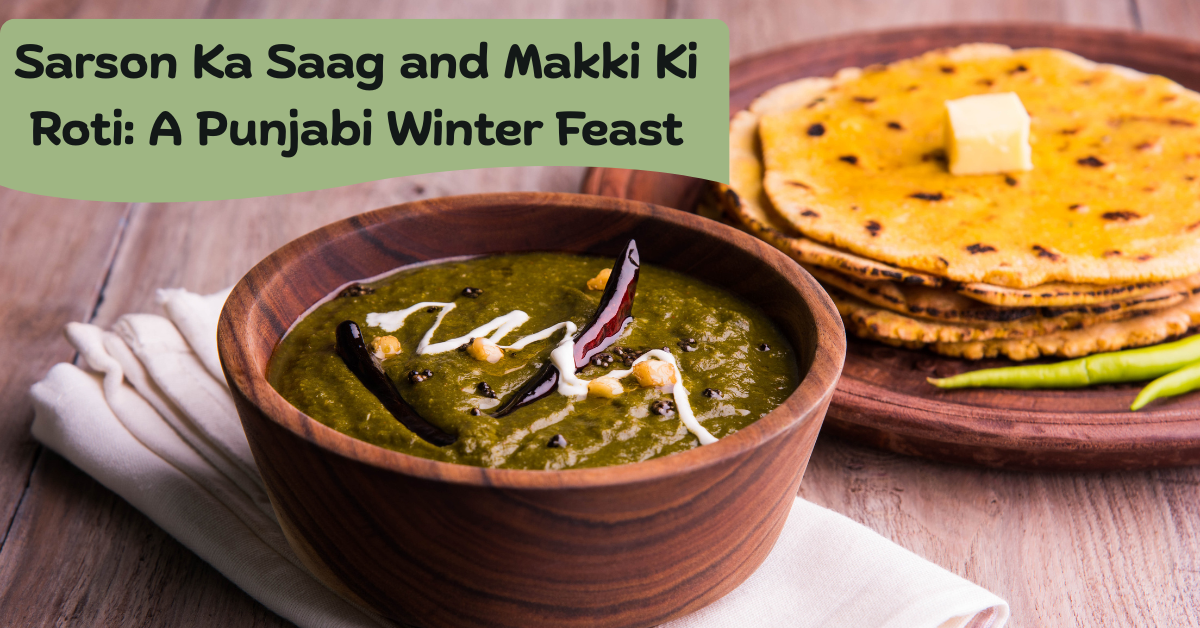
Oh ji, as soon as winter descends in Punjab, there’s one thing that tunes in like dhol in every single punjabi heart. You can feel Sarson Ka Saag and Makki Ki Roti in the air! After all it’s not any ordinary meal, yaar! It’s an earthy celebration in every single bite. Wrapped in the farm-fresh mustard greens served with the golden maize bread, It is truly the soul of Punjabi winters. This heavenly combo is loved for generations. Let’s dive into the mouth watering and soulful Makki ki roti and Sarson ka Saag recipe.
Sarson Ka Saag – The Golden Mustard Symphony
From vast mustard fields stretching as far as the eye can see, those hardy sarson dainty leaves are hand picked fresh and that is where the magic begins. The whole family used to sit together for the slow, memorable and loving preparation of the saag. It’s not just cooking; it is a ritual. The aroma of fresh saag wafting through the home feels like heaven on earth. It can bring even the busiest soul to the kitchen. Here’s the ultimate Sarson Ka Saag recipe!
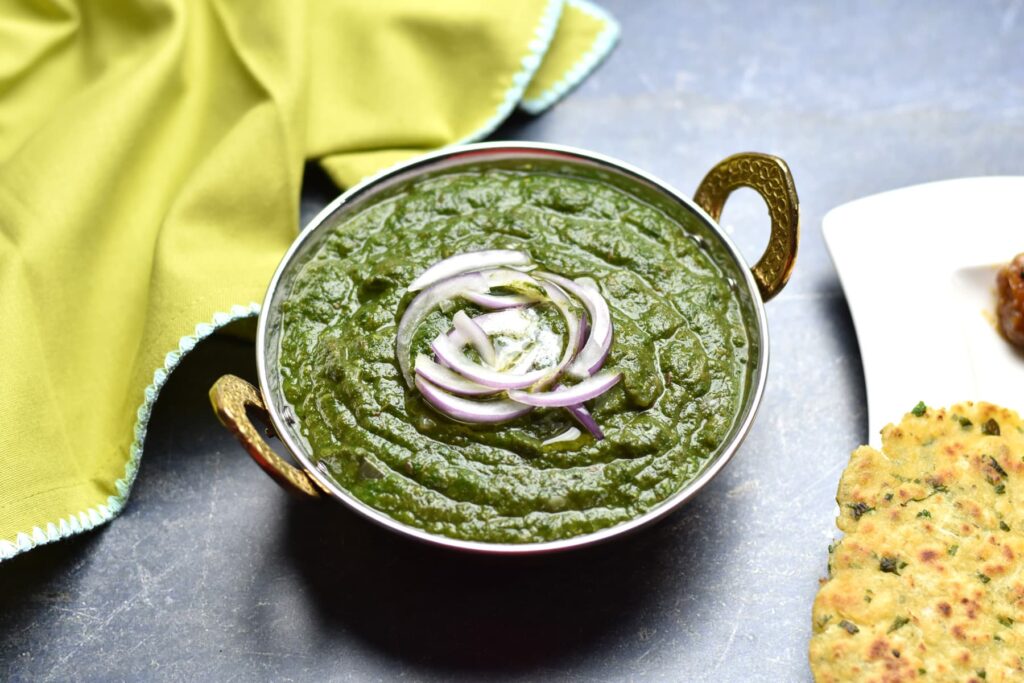
Sarson Ka Saag Recipe (Authentic Punjabi Style)
Ingredients:
- 2 bunches of fresh mustard leaves (sarson ke patte)
- 1 bunch of fresh spinach (palak)
- ½ bunch of fresh bathua leaves (enhances taste)
- 1/2 bunch of fenugreek leaves (methi)
- 3-4 finely chopped garlic cloves
- 1 inch finely chopped or grated ginger
- 3-4 finely chopped green chilies
- 1/2 finely chopped onion
- 1 tsp of turmeric powder (haldi)
- 1 tbsp of cornmeal (makki ka atta)
- Salt and black pepper to taste
- 2-3 tbsp of pure ghee or mustard oil
For the Tadka (Tempering):
- 2 tbsp of pure ghee
- 2-3 finely chopped garlic cloves
- 1 finely chopped small onion
- 1-2 broken dry red chilies
- 1/2 tsp of asafoetida (hing)
- 1 tsp of coriander powder (for flavor)
- 1 tsp of garam masala
Procedure:
- Prepare the greens: First of all properly wash mustard, spinach, bathua, and methi leaves thoroughly. Wash and rinse several times to remove all the dirt. Then chop them finely.
- Cook the greens: Take a pressure cooker or a large pot, put chopped greens, garlic, ginger, green chilies, turmeric powder, salt and black pepper to taste, and a little water (around 1 cup) in it. Pressure cook it for at least 4-5 whistles.
- Mash and thicken: Once cooked and soft, mash the fresh greens coarsely with a masher. You can also use an immersion blender for slight smoothness. Well, authentic saag has texture, that’s what Punjabis love.
- Simmer, art of slow cooking: Put the blended puree and cornmeal (makki ka atta) in the pot or cooker and simmer the mixture for at least 5-10 minutes until it gets thick.
- Prepare tadka: Take a pan, heat ghee in it, put chopped garlic and sauté it until golden. Add onions and dry red chilies in it and saute well. Add asafoetida, coriander powder, and garam masala in it, mix well. Cook until onions get caramelised and spices release aroma.
- Combine: Pour this sizzling hot tadka over the saag and mix it well. Cook it for another 5 minutes on low flame.
- Serve: Serve it hot. Top it with a dollop of white butter or pure ghee accompanied by makki ki roti.
Makki Ki Roti – The Royal Cornbread
What’s the point of having saag without Makki Ki Roti? Believe me, these aren’t ordinary rotis. These are delicious, dense, hearty, and made of golden cornmeal. Making this flatbread takes skill and patience and that’s not a cinch.
This golden dough is rough, the rotis are thick and textured, and they cook slowly on a cast-iron tava until they get a perfect toasted crust along with a buttery softness inside.
Here’s the fun part, rolling them out takes some muscle! Here’s the tempting Makki ki roti recipe.
Makki Ki Roti Recipe (Cornmeal Flatbread)
Ingredients:
- 2 cups of cornmeal (makki ka atta)
- Luke warm water (as needed to knead)
- Salt and black pepper to taste
- Pure ghee or butter
Procedure:
Make dough: Mix cornmeal and salt to taste in a bowl. Slowly add warm water and knead it gently until it gets soft and clayey. Cornmeal is gluten-free, so the dough will not be stretchy. It will be flaky and sticky.
Shape rotis: Divide the dough into lemon-sized balls. Place the dough on a clean flat surface and cover it with a plastic sheet or use a flat thick cloth. Then flatten it gently into a round shape roti (this technique is important to prevent roti from breaking).
Cook roti: Heat a cast iron tava or skillet on medium flame. Transfer the flattened roti very carefully onto the hot greased tava. Then cook one side for at least 1-2 minutes until it gets light brown colored spots on it. Flip it carefully and cook it on the other side as well. Apply ghee on both sides while cooking. Press the edges gently with a spatula.
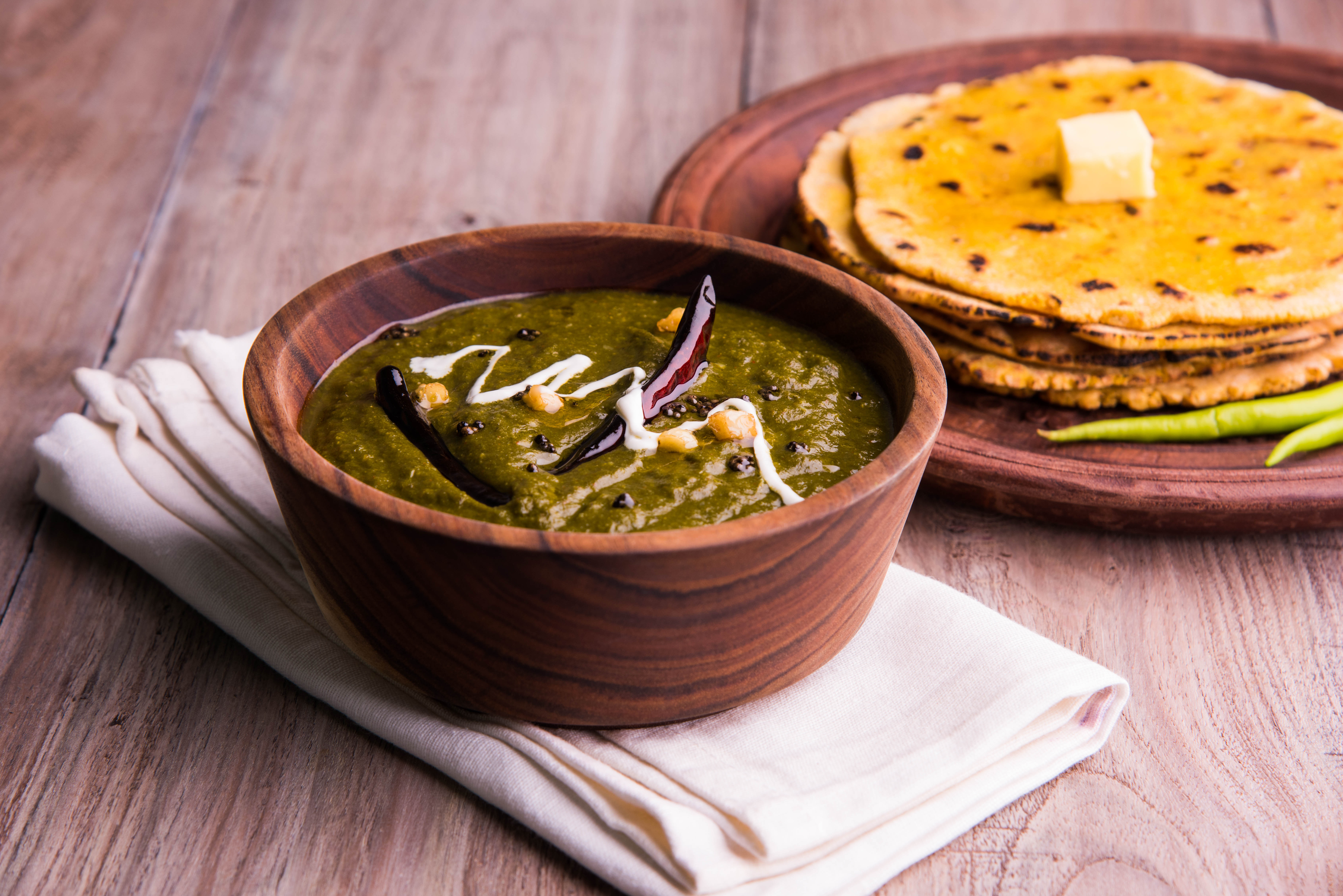
Serve hot: Serve hot and crispy makki ki roti with dripping ghee or white butter. Pair it with sarson ka saag, and keep raw onions or jaggery as a side.
Health Powerhouse in Punjabi Style
Everybody knows Punjabis don’t compromise on taste nor do they do it on health. Health is an essential part of this yummy story here. Fresh Sarson greens are packed with vitamins A, C, iron, calcium, and fiber. On the other hand Makki ki roti is rich in carbohydrates and fiber. Let’s have a look at their nutritional values:
| Nutrient | Sarson Ka Saag (100g serving) | Makki Ki Roti (1 medium roti ~ 60g) |
| Calories | 64-150 kcal | 200-220 kcal |
| Carbohydrates | 4.3 – 9 g | 40-45 g |
| Dietary Fiber | 2.2 – 3 g | 5-6 g |
| Sugars | 1 – 4 g | 1-2 g |
| Protein | 1.9 – 4 g | 5-6 g |
| Fat | 4.3 – 12 g (mostly from ghee or oil added) | 2-4 g (with ghee/butter, can be higher) |
| Saturated Fat | 1 – 4 g | 0.5 – 1 g |
| Cholesterol | 0-10 mg (due to ghee/butter) | 0 mg |
| Vitamin A | 360 – 4780 μg (very high, from mustard greens) | Negligible |
| Vitamin C | 1 – 25 mg | Negligible |
| Calcium | 60 – 180 mg | 10-30 mg |
| Iron | 1 – 2.4 mg | 1-2 mg |
| Potassium | ~196 mg | 150-200 mg |
The Showstopper – Punjab’s Winter Love Letter
So, when winter calls, Sarson Ka Saag always says “Welcome, yaar!” just the way you want. For more healthy recipes, and unforgettable savoury delights stay tuned with us at Chefs Home Around!