
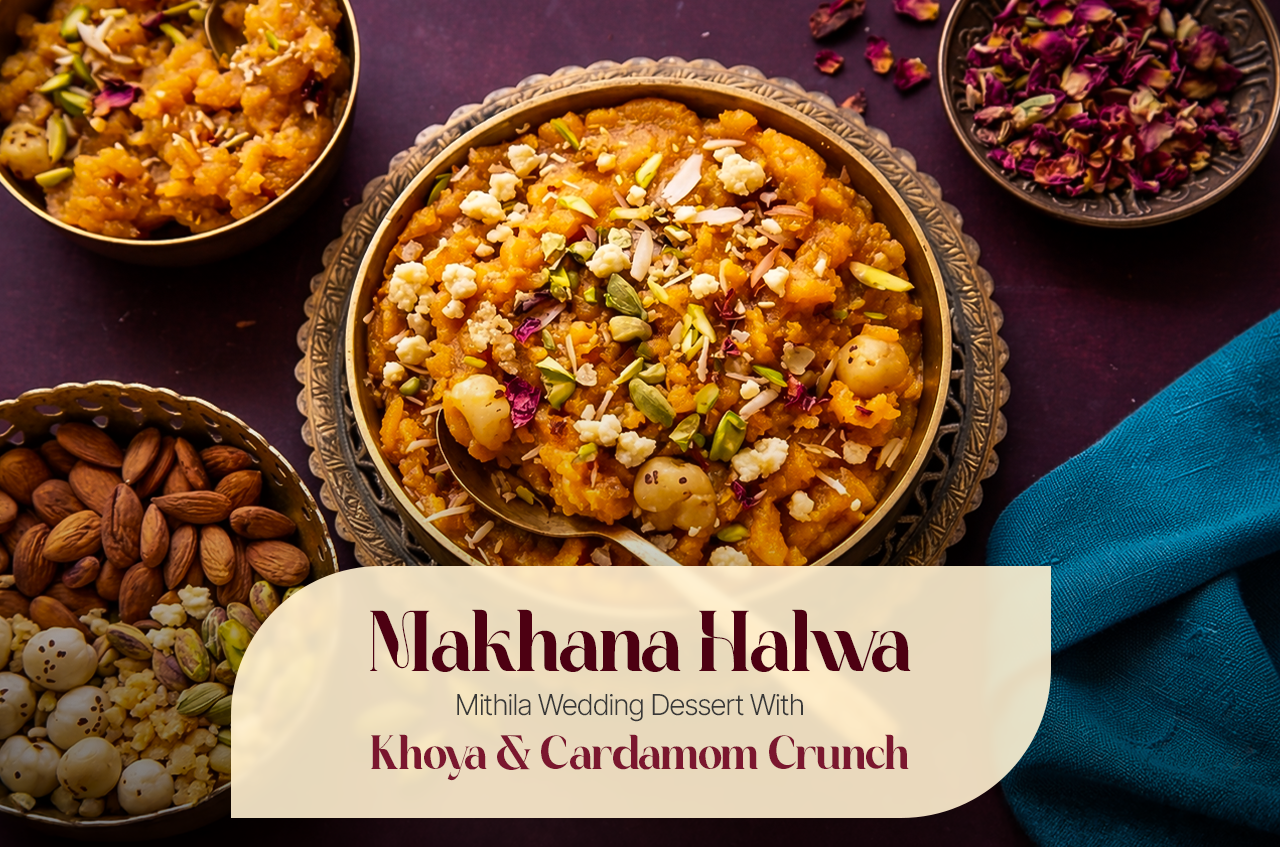
Close your eyes and visualize a bride calmly sitting in a courtyard in Madhubani to soft sohar songs playing. Her arms are adorned with red chooriyan; there is a warm, nutty scent wafting from the kitchen
It is not from gulab jamun or jalebi: it is from Makhana halwa.
Makhana halwa is simple, soft, crunchy when slightly cooked and brings you deep comfort — it’s not just food at Mithila weddings. It’s an emotion. It’s tradition. It’s the one dish that doesn’t come across as trying “too hard,” yet still steals the show.
Unfortunately it is one of the golden lost recipes our ancestors indulged in. Let me take you to this lovely, unknown space. In this blog we will be exploring one of the best and easy desserts to make at home!
Table of Contents
A Dessert That’s More Than Just Sweet
In Mithila culture, food is not just about taste; it has meaning. Mithila gave us many authentic Indian recipes and one of them is makhana halwa. Making it and serving it at weddings is part of vivah sanskar. It is made with warmth, has blessings for you, and is a silent wish for a beautiful married life to come.
Madhubani and Darbhanga (in Bihar) are called the “heartland” of makhana (fox nuts). India has the highest-quality makhana; it grows in ponds, processed by hand, and turns into something magical.
What separates this particular halwa from others is its balance.
Unlike heavier varieties of halwa, such as moong dal, this type of halwa has a lighter, fluffier consistency due to the addition of makhana. Khoya makes this halwa rich in taste but is balanced by the mild and fragrant cardamom, which brings all the flavours together.
Why Makhana Halwa Feels So Special
Such types of traditional desserts have a feeling of comfort and satisfaction. Whether it be the texture from the soft halwa and the crispy bits of roasted makhana, the aroma from ghee and cardamom combining slowly, or the memories of large family gatherings and cooking for weddings that it brings back — it is full of nature’s nutrients.
Makhana is an ideal choice for your body because:
- It is low-fat and light
- It is a good source of protein
- It is gluten-free.
This makes this dessert a great combination of indulgent but also mindful of what you are putting into your body. It is no wonder that it has been enjoyed across generations, from grandmothers to modern-day brides and all the many people in between.
The Traditional Mithila Recipe (Made Simple)
How about we bring this magic into your kitchen? Sounds exciting, right?
Ingredients:
- 2 cups of makhana (fox nuts)
- 1 cup of khoya (crumbled)
- ½ cup of desi ghee
- ¾ cup of sugar (or mishri for authenticity)
- 1 cup of full-fat milk
- 4–5 green cardamom pods
- A handful of chopped nuts (cashews & almonds)
- A few strands of saffron
- 1 tsp of rose water
- Dry Fruits
Step 1: Roast the Makhana & Almonds
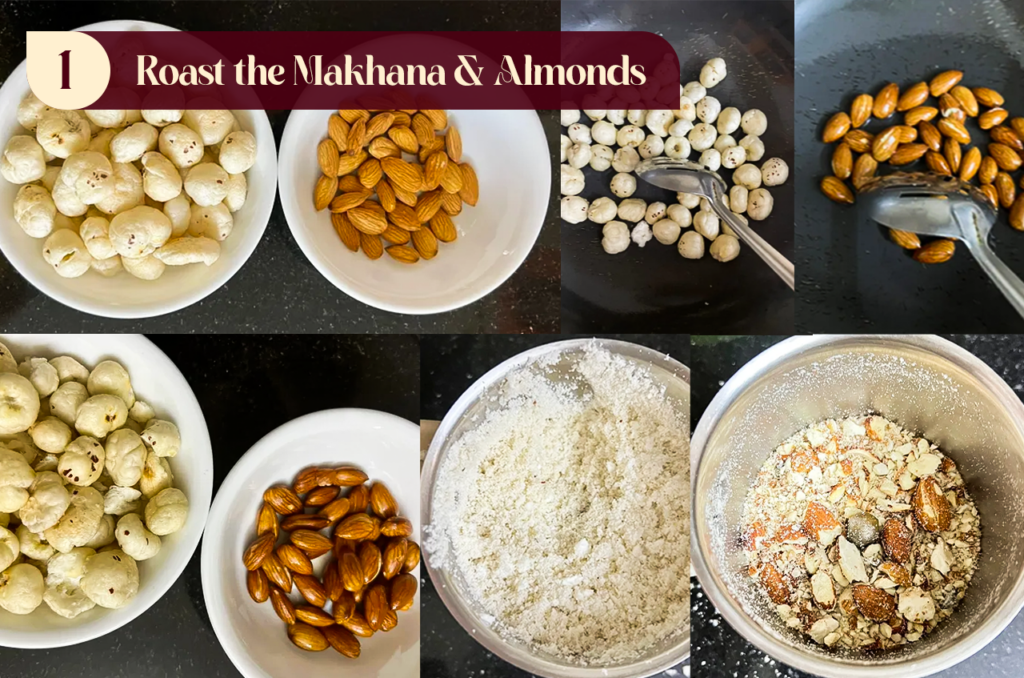
To make this halwa, heat ghee in a large skillet. Roast the makhana and almonds in the ghee over medium heat, until the makhana:
- Turns golden brown
- Crisps
- Makes a crackling sound
Remove half and set aside to use as a crunchy topping. Crush or grind the remaining 1/2 of the roasted makhana & almonds gently with a mallet or food processor.
Step 2: Cook the Khoya
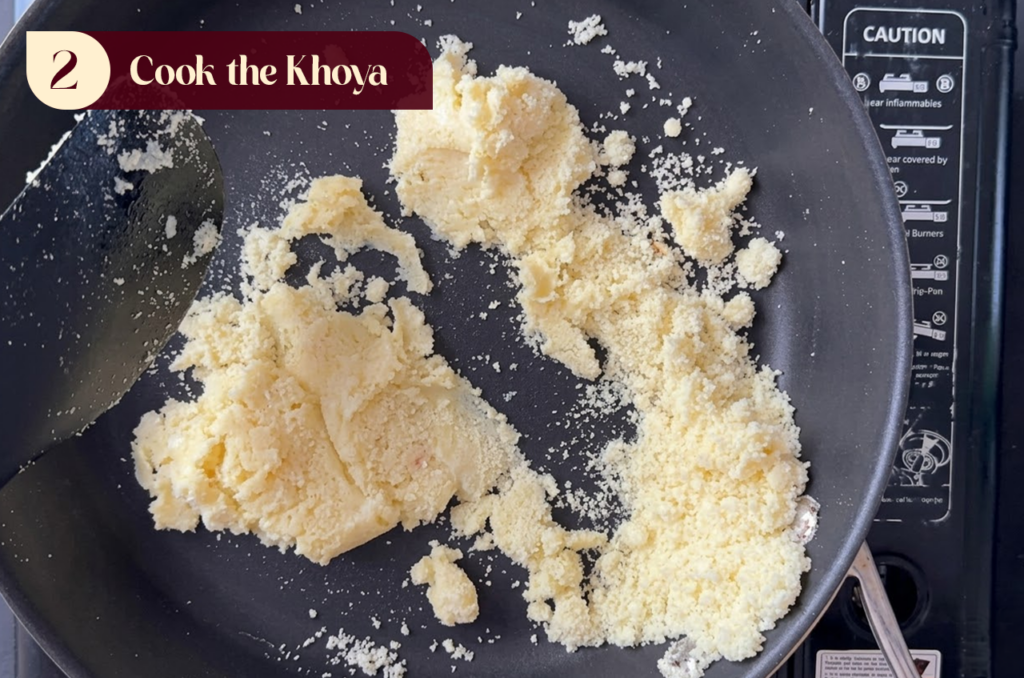
In the same skillet, add the crumbled khoya and cook over a low heat, stirring constantly, until:
- It is soft
- Smells good
- Becomes slightly creamy
Next, add the crushed makhana and finish mixing together.
Step 3: Build the Halwa
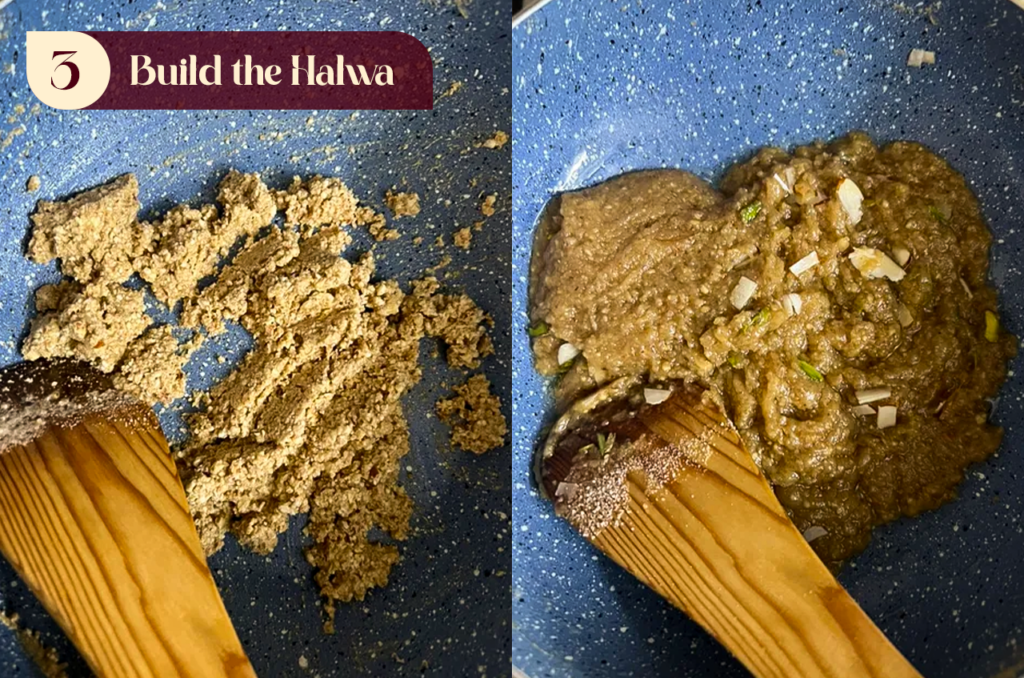
Combine the sugar and warm milk, then pour it slowly into the pan while continuing to stir. Add:
- Crushed cardamom
- Saffron (optional)
During cooking, you will see that the consistency changes from a thin liquid to a thick and shiny substance.
Step 4: Final Touch
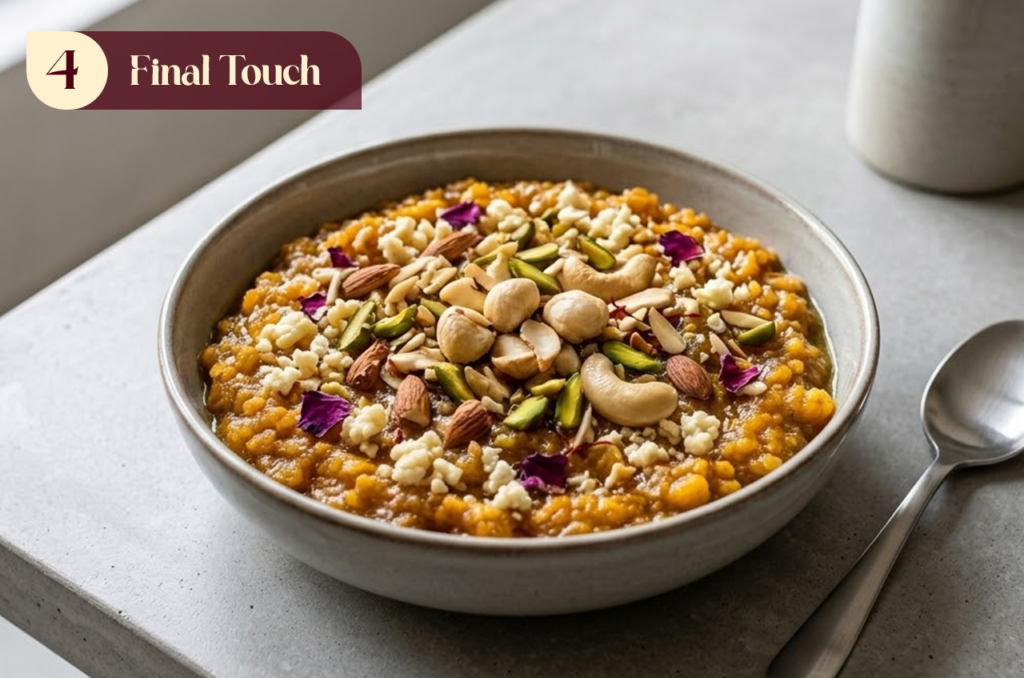
To add some texture to the dish, mix roasted whole makhana into the batter.
In another small skillet, fry the nuts in some ghee and drizzle over the halwa.
For a final touch, drizzle a few drops of rose water over the halwa and continue to stir for another 1-2 minutes to allow all the ingredients to blend.
Serve the halwa warm.
How It’s Served in Mithila Weddings
It is one of the easiest desserts to make at home but when it is decorated it feels so tempting to eyes and heart as if some special conversation is going on with food. In Mithila, presentations are made with consideration.
Makhana halwa is typically presented in a steel or silver tray; usually accompanied by a small diya, thus providing the recipient with a warm, soothing, and personal experience.
Some examples of where makhana halwa is served include:
- Brides may serve the makhana halwa to family and friends during a Griha Pravesh.
- During winter weddings, makhana halwa is often served along with either peda or malai.
- Makhana halwa may be formed into smaller portions for ease of service.
In presentation, nothing is overdone; simply presented, such is the inherent beauty of the dish.
The Health Side No One Talks About
The nutritional benefits of Makhana Halwa are impressive.
Makhana is:
- Low in fat
- High in protein
- Contains antioxidants
- Cardamom helps with digestion
- Khoya contains calcium
When you eat this food item, you’re nourishing your body in addition to enjoying it.
That’s what makes it a great food item during fasting seasons like Navratri as well.
Modern Twists for Today’s Kitchens
Just like all traditional items, Makhana Halwa is changing as well.
More people are trying different things with makhana halwa today, like:
- Using jaggery instead of sugar
- Using vegan khoyas
- Using coconut to create makhana halwa
- Using chocolate or coffee as the basis for creating makhana halwa
However, no matter how modern you make it, the heart of the dish will always remain the same.
In business, everything you eat is sweet and soft and has a nutty flavor.
Not Just for Weddings
People often use Makhana Halwa at wedding celebrations, but it is not exclusive to that event by any means.
Makhana Halwa is also enjoyed for the following reasons:
- To offer as bhog on Janmashtami
- For Teej and Karva Chauth celebrations
- As a treat to your family at home while enjoying the cool winter nights
There is no reason to need an occasion for Makhana Halwa. Some evenings, all you need is a warm bowl of Makhana Halwa and your peace of mind.
Final Thought: A Spoonful of Mithila
Halwa made with makhana is more than just a dish.
- It evokes emotion.
- It represents coziness within a Mithila household.
- It recalls the purity of tradition.
- It embodies a subtle sweetness that lingers without being cloying.
The next time you wish to experiment with a different type or style of dessert, think about choosing makhanas instead of your normal choices.
Assemble your ingredients; prepare them slowly by cooking them at low heat until they are tender. Allow the fragrance to permeate your environment.
After completing the above, you will almost surely experience the ambiance of a Mithila celebration: an atmosphere that is soft, comforting, and simply yet magnificently arranged. For more gluten free recipes, authentic Indian recipes, traditional desserts and lost recipes stay tuned with us at Chefs Home Around!









wish you all the best
Thank you